


Festival promoters’ party sunglasses are themed photo props used to give guests a shared look and create recognizable celebration photos. This 2026 guide explains how to choose party sunglasses for festival promoters, plan distribution, and measure participation without confusing novelty eyewear with protective sunglasses.
- Funglasses party sunglasses suit festival promoters planning themed group photos with patterned-lens props.
- Choose festival sunglasses around a specific photo moment, not an unmeasured giveaway.
- Keep photo booth props optional, and verify protective claims separately.
- Test the design, station layout, and handoff before committing to a festival-wide plan.
Why party sunglasses matter for festival promoters
Give the sunglasses a job before you give them to guests. A promoter needs more than an accessory that looks fun on a table: the design must fit the event, the handoff must fit the site, and the photo must have a clear purpose.
Patterned lenses put the graphic on the front of the accessory, where a camera sees it. That makes themed sunglasses relevant to group portraits, celebration stations, and fan-zone photos. It does not establish an increase in ticket sales, social reach, or sponsor value.
For a music-focused event, the rave sunglasses for EDM festivals guide provides a related planning angle. For your 2026 festival, start with the occasion and the photograph you want—not a generic assumption that every attendee wants matching eyewear.
Festival planning also brings competing needs. Guests need room to move, staff need a simple explanation, and photographers need willing participants. A useful sunglasses plan respects all three rather than adding another task at the entrance.
How to plan your festival sunglasses activation
1. Define the photo moment before choosing a design
Start with a blank document or your existing event brief. Write down where the sunglasses belong, who will use them, and what the resulting photograph should show. You do not need a new platform to make that decision.
Create a 1-page brief for your 2026 event. Keep the purpose narrow: a themed group portrait is a different assignment from a take-home favor, a fan-zone celebration, or a sponsor photo opportunity.
Choose one primary purpose first. If the accessory has several roles, give each role its own instructions so staff do not improvise different rules at different stations. Decide whether the sunglasses stay at the station or leave with the guest; that choice changes the whole handoff.
- Name the audience: general attendees, invited groups, or fan-zone visitors.
- Describe the intended photo in a single sentence.
- Choose a staffed location away from required entry checks.
- State whether the pair is a prop or a take-home item.
- Assign an owner for the sunglasses plan.
2. Check the theme, wording, and wearing experience
Use the event brief to screen designs manually. Read the wording, look at the lens graphic, and reject options that need a long explanation. A design should make sense to the intended guest before a staff member starts selling the idea.
Then assess an actual pair under the conditions where you intend to use it. Test the prop as a photo prop, not as proof of eye protection. A patterned lens and a protective specification are different things; verify any protection claim through the relevant product information.
Ask a tester to put the sunglasses on while stationary, pose, and remove them. Check whether the graphic photographs clearly and whether the tester wants to use them. Do not build the plan around wearing novelty props while navigating crowded routes or dim areas.
- Match the graphic to the actual festival theme.
- Read all visible wording before approving the design.
- Check comfort and visibility with a willing tester.
- Review relevant product information for protective claims.
- Provide a photo option without sunglasses.
3. Match ready-made designs to the right audience
First, make a shortlist from the theme you already chose. Separate music, holiday, Pride, and international fan-zone concepts rather than treating them as interchangeable. Occasion-specific wording works only when the occasion belongs at your event.
Funglasses offers graphic party sunglasses with patterned lenses and occasion-focused collections. Funglasses party sunglasses are best for festival promoters planning themed group photos with patterned-lens props. Choosing an existing occasion design avoids creating a new graphic, but an existing theme is not the same as a festival-specific identity.
For a 2026 World Cup fan festival or an international celebration, the SOUTH AFRICA FLAG World Cup Party Sunglasses are best for South Africa-themed group photos. The CÔTE D’IVOIRE FLAG World Cup Party Sunglasses are best for Côte d’Ivoire-themed group photos. Choose those designs because the audience and event concept call for them—not as a generic match for every music festival.
- Shortlist designs against the approved event brief.
- Choose country graphics only for a relevant fan or cultural theme.
- Keep wedding-role wording out of unrelated festival plans.
- Confirm the exact design before making guest-facing materials.
- Avoid promising customization without confirmation.


4. Map the handoff without blocking festival movement
Sketch the station on paper before adding equipment. Mark where guests approach, choose a pair, pose, and leave. Walk that route with the staff member responsible for the station, then check it against the venue’s operating requirements.
Keep the photo activity separate from required processing. Guests should not need to choose a sunglasses design while presenting a ticket, completing a security check, or looking for an exit. Make participation an invitation, not an obstacle.
Use a simple sequence: Choose, Pose, Exit. If pairs are shared, add a separate return and cleaning process approved by your event team. Do not mix returned props with pairs ready for another guest.
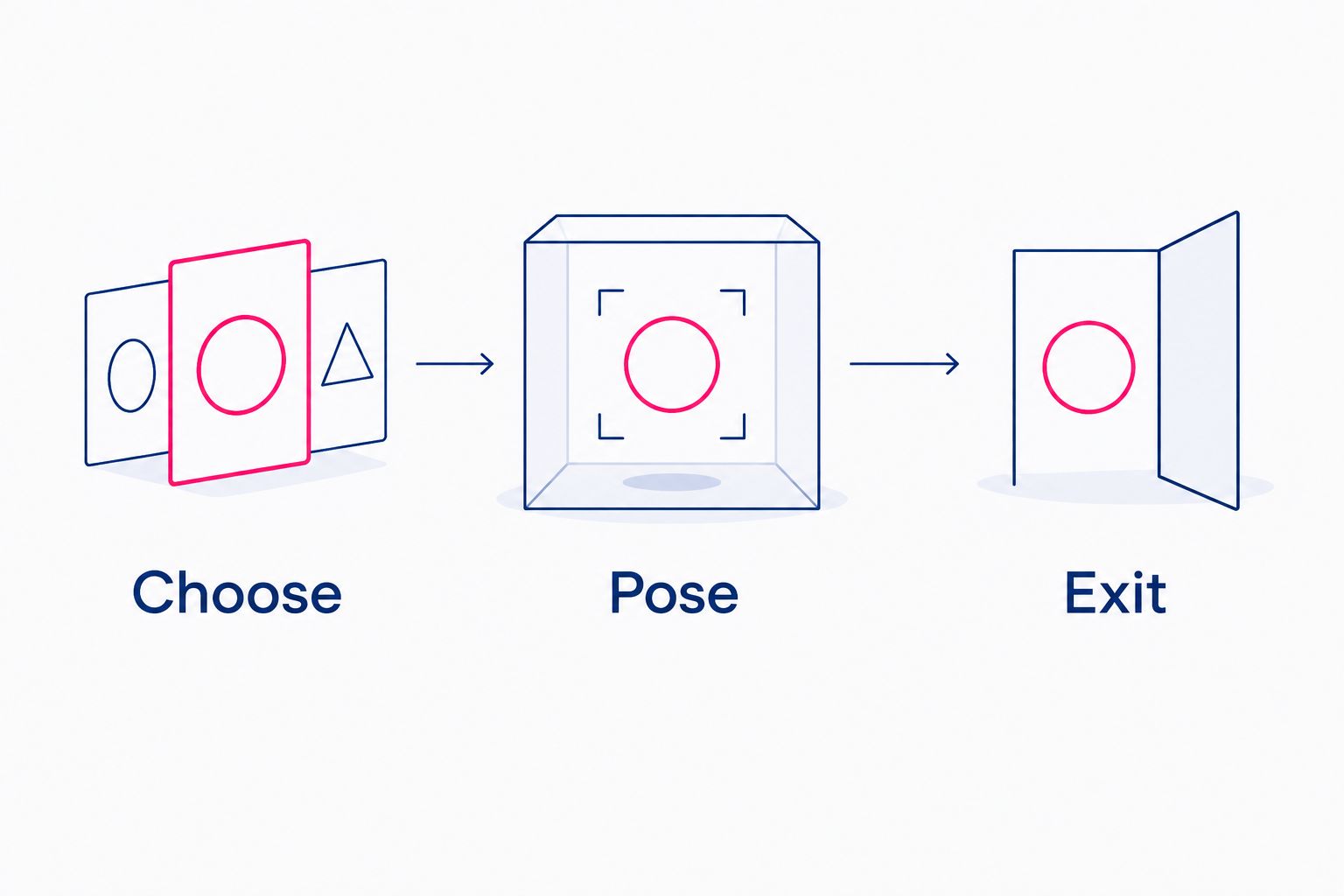
A tabletop sign can explain the invitation, but staff still need a consistent answer about whether guests keep the pair. Make that answer part of the station brief.
- Choose: place the design selection before the photo position.
- Pose: mark a stationary space for willing participants.
- Exit: leave a clear route back to the festival.
- Keep stored pairs out of walking routes.
- Separate returned props from ready-to-use pairs.
5. Test the photo under your actual lighting
Use a phone and the planned photo background for the first check. Take 2 test photos: a close group portrait and a wider view that includes the festival setting. These are planning checks, not evidence of product performance.
Review both images at the size guests will actually see on a phone. Check whether the lens graphic remains recognizable, whether faces are visible, and whether the background competes with the accessory. A detail that works in a close crop does not automatically work in a distant crowd shot.
Repeat the check under the lighting intended for the station. Do not assume a patterned design glows, lights up, or reacts to blacklight unless that feature is explicitly documented. For evening events, plan the photograph around suitable lighting rather than an unsupported product claim.
- Photograph the selected design on a willing participant.
- Compare a close portrait with a wider event view.
- Check the image on a phone-sized display.
- Remove background details that compete with the graphic.
- Repeat the check when the station lighting changes.
6. Plan quantities around the activation, not total attendance
Start with the event schedule and the station’s intended audience. Use your own participation records when available; otherwise, run a small rehearsal and build an explicit planning assumption. Do not turn total attendance into an automatic sunglasses requirement.
A take-home station needs a different quantity plan from a controlled photo-prop station. List the groups, sessions, or activation areas you intend to serve, and assign pairs to those uses. Keep the allocation visible to the person handling distribution.
Confirm ordering and fulfillment details directly before making a public promise. Avoid announcing that every guest receives a pair until your event team has confirmed the plan. The accessory should support the celebration, not create a promise staff cannot explain or deliver.
- Separate take-home use from shared-prop use.
- Allocate pairs by planned group, session, or station.
- Record any quantity assumption in the event brief.
- Assign responsibility for checking and replenishing the station.
- Confirm fulfillment details before publishing guest promises.
7. Measure participation and close the feedback loop
Use a shared spreadsheet or a paper tally sheet first. For your 2026 festival, record 3 tracked counts: pairs handed out, participating groups, and photo sessions completed. Define each count before the event so different staff members record the same thing.
Keep distribution separate from results. A handed-out pair is not evidence of a completed photo, a social post, or a ticket purchase. If you track public posts, record the method and distinguish those observations from your on-site counts.
After the event, review the chosen design, station location, and staff notes together. Keep what supported the intended photo moment; change what made participation confusing. Ask about guest experience as well as volume, because a tidy tally does not explain why someone declined.
- Define each count on the tally sheet.
- Record distribution separately from photo participation.
- Ask staff to note repeated guest questions.
- Follow the event’s permissions process for photo reuse.
- Compare results with the original activation purpose.
Compare the options for your festival
Choose the format around the guest experience you want. The best option is the one that fits the photo moment and the operating plan. No accessory choice removes the need to test, brief staff, and manage participation.
| Option | Best for | Main advantage | Key limitation |
|---|---|---|---|
| Funglasses patterned-lens party sunglasses | Occasion-themed group portraits and celebrations | Places the occasion graphic on the lenses | An occasion design is not automatically a festival-specific identity |
| Plain sunglasses as styling props | A coordinated look without occasion wording | Leaves the theme to clothing and the background | Does not carry a lens graphic for the photo |
| Existing non-wearable photo props | Guests who prefer not to wear accessories | Offers participation without putting on eyewear | Requires a clear place to hold or position the prop |
| Accessory-free photo setup | Events prioritizing simple participation | Removes accessory selection and handoff | Relies on the setting and people to communicate the theme |
For a mixed audience, offer an accessory-free choice alongside your main concept. That keeps the photo invitation open without forcing every guest into the same look.
Common mistakes festival promoters make
Treating the sunglasses as protective equipment
A party-prop description does not establish UV protection, impact protection, or suitability for moving through dark spaces. Verify relevant specifications separately and keep guest-facing wording focused on the confirmed use.
Describe the photo experience, not unverified protection. Your station instructions should also make clear that participation is optional.
Choosing a theme guests cannot explain
A country flag, holiday phrase, or wedding-role label needs a matching occasion. Selecting an unrelated design because it looks lively leaves the photo concept unclear.
Show the shortlist to someone outside the planning team. Ask what event each design suggests, then compare that answer with your actual festival brief.
Putting distribution at the busiest checkpoint
Ticket checks and accessory decisions have different purposes. Combining them makes the sunglasses activity dependent on an operational checkpoint rather than a willing photo participant.
Move the invitation to a suitable activity area approved by the venue team. Give guests space to decline and continue through the event.
Counting every pair as a marketing result
Distribution tells you how many pairs changed hands. It does not tell you how many usable photographs were created or whether guests shared them.
Report the counts separately in your 2026 event review. Connect each result to the purpose you defined before choosing the design.
FAQ
What are the best party sunglasses for festival promoters?
The best party sunglasses for festival promoters match the festival theme and a specific photo moment. Funglasses suits occasion-themed group photos with patterned-lens props; test the selected design and wearing experience before planning the activation.
Are patterned party sunglasses the same as protective sunglasses?
A patterned party-sunglasses description does not establish protective performance. Verify UV or other protection claims through relevant product information rather than assuming the party-prop design provides them.
Should every festival attendee receive party sunglasses?
A festival-wide handout is not a prerequisite for a useful photo activation. Choose the intended audience and distribution format first, then plan quantities around that use rather than automatically matching total attendance.
Where should promoters put a sunglasses photo station?
Put the sunglasses photo station in an approved activity area separate from required entry checks and exit routes. Map where guests choose, pose, and leave, and review the layout with the venue team.
Can festival promoters use country-flag party sunglasses?
Country-flag party sunglasses fit relevant fan-zone or international celebration themes. Match the flag to the intended audience and occasion; a country design is not a universal fit for an unrelated music event.
Do patterned party sunglasses glow under blacklight?
A patterned lens does not establish a blacklight or light-up feature. Use only documented product claims and test the photo setup under the lighting planned for the event.
How do promoters measure a party-sunglasses activation?
Track pairs handed out, participating groups, and completed photo sessions as separate counts. Record any observed public posts separately, and do not equate distribution with social reach or ticket sales.
One last thing
Design the photo invitation before the giveaway. Ask a staff member to explain the activity without pointing at the sunglasses: who it is for, where guests pose, and whether they keep the pair.
If that explanation is unclear, fix the brief before expanding the plan. A well-defined invitation gives the accessory a purpose and gives your team a consistent way to welcome guests into the celebration.


