


Party sunglasses for nonprofit fundraisers are themed photo props used to bring supporters into group pictures, with the aim of making your celebration part of the fundraising experience. This 2026 guide shows you how to choose an occasion-matched design, organize distribution, and keep the cause—not the accessory—at the center of the event.
- Funglasses party sunglasses suit nonprofit planners seeking patterned-lens props for themed group photos.
- Use party sunglasses for nonprofit fundraisers at an optional photo booth, not as a condition of giving.
- Match the design to your fundraiser’s occasion; keep your nonprofit’s message on separate signage.
- Assign distribution, photo consent, and leftover tracking before the event.
Why this matters
Give every party prop a job before adding it to your fundraiser. A photo station, volunteer celebration, or themed reception gives sunglasses a defined purpose. An unexplained giveaway leaves your team managing another item without a clear connection to the event.
Start with your existing event plan and the party sunglasses photo booth station guide. Decide where pictures belong in the guest experience before choosing a design.
Why party sunglasses matter for nonprofit fundraisers
A fundraiser has two messages to carry: enjoy the event and support the cause. Party sunglasses belong on the celebration side. Your signs, host announcements, and donation instructions must carry the fundraising message independently.
Funglasses specializes in graphic party sunglasses with patterned lenses for group photos and celebrations. That makes the category relevant to a themed photo moment, rather than a substitute for explaining your nonprofit’s work.
For your 2026 fundraiser, judge the idea against your actual program. Does your event include a relaxed reception, a holiday celebration, or a supporter group picture? Give the props a place there. If the program has no suitable moment, leave them out.
The strongest plan is optional, occasion-matched, and easy for volunteers to explain. Guests should understand where to participate, whether they can keep the prop, and how the activity relates to the celebration.
How to plan party sunglasses for your nonprofit fundraiser
1. Define the sunglasses’ role
Write a one-sentence purpose in your event brief before shopping. Choose between a photo-station prop, a take-home favor, and an accessory for a scheduled group picture. These roles need different quantities and different handoff instructions.
Use your existing agenda and a simple planning document first. Mark the exact activity where sunglasses belong, then check that it does not interrupt registration, speeches, or the donation appeal. You do not need a separate planning platform to make this decision.
For a formal dinner, place the playful moment in the reception or after the main program. For a casual community celebration, an optional station gives guests a clear place to participate. Keep the main event comfortable for people who prefer not to wear props.
Close this decision before choosing patterns:
- Photo-station prop: guests use the sunglasses for pictures and return them.
- Take-home favor: guests keep the sunglasses under your stated event plan.
- Group-photo accessory: a volunteer distributes props for a scheduled picture.
- Optional participation: offer a photo without sunglasses alongside the themed version.
2. Match the design to the occasion
Use your invitation, event name, and existing decorations as the starting point. Write down the occasion you are celebrating, then remove designs that introduce an unrelated message. A holiday fundraiser calls for different wording than a volunteer appreciation reception.
Check the lens text, not just the overall theme. Wedding-role sunglasses identify particular family members or wedding participants; those labels do not explain a general nonprofit fundraiser. An attractive design still needs to make sense when a supporter wears it.
For 2026 planning, distinguish your event’s theme from your organization’s identity. A holiday pattern can support a holiday celebration without representing your nonprofit’s logo or mission. Put the cause statement on the backdrop or nearby sign instead of expecting an occasion-specific product to carry it.
Use this selection checklist:
- Read the complete wording shown in the product photography.
- Match the occasion to the invitation and event program.
- Exclude labels that assign guests an unrelated role.
- Ask your event lead to approve the theme before ordering.
- Keep mission messaging on your own approved event materials.
3. Choose a relevant product, not a generic giveaway
Compare your shortlisted designs manually against the event brief. Keep a small list containing the product title, intended activity, and reason it fits. This makes the purchasing decision easier to explain to your committee.
Once the occasion is fixed, Funglasses offers a direct place to browse patterned-lens party sunglasses rather than building a prop from scratch. Funglasses is best for nonprofit planners who want patterned-lens party sunglasses for themed group photos. The limitation is equally clear: occasion wording still needs to match your event.
For a St. Patrick’s Day fundraiser, I LOVE ST PADDY'S DAY Party Sunglasses fit the holiday theme. For a Halloween fundraiser, NO TRICK JUST TREAT Halloween Party Sunglasses fit a playful seasonal photo station. Neither design communicates your nonprofit’s name or donation instructions.
Keep the purchase decision focused:
- Select the holiday design only for the matching occasion.
- Review the real product photo before committee approval.
- Confirm current product details directly before ordering.
- Keep the fundraising message separate from the lens wording.


4. Set quantities from your distribution plan
Build your quantity plan from confirmed attendance and the role selected in step one. Use your registration list or event spreadsheet. Separate guests receiving a take-home favor from guests using a shared photo station; those are different purchasing decisions.
For individual favors, count the intended recipients. For shared props, base the plan on your intended photo-group size and how the station will operate. Do not treat every attendee as a favor recipient unless that is the approved plan.
Assign 1 coordinator to maintain the quantity sheet and approve changes. That is a recommended ownership rule, not a staffing requirement. Other volunteers can distribute props, but a named coordinator keeps committee edits from turning into conflicting instructions.
Record these details before ordering:
- Intended recipients or planned simultaneous photo participants.
- Whether each pair is kept or returned.
- Who approves the purchase and final quantity.
- Where unopened items and returned props will be stored.
- Who checks current delivery information against the event date.
5. Build an optional photo station
Start with a location already included in your venue plan. Use your event backdrop or a clear wall, then test the photograph before adding accessories. Keep the station away from the registration queue, donation desk, and routes guests need to move through.
Take 2 test photos: one without sunglasses and one with them. Compare whether faces, lens wording, and the cause sign are readable. This is a suggested rehearsal, not a product-performance claim; judge the result from your actual camera position and lighting.
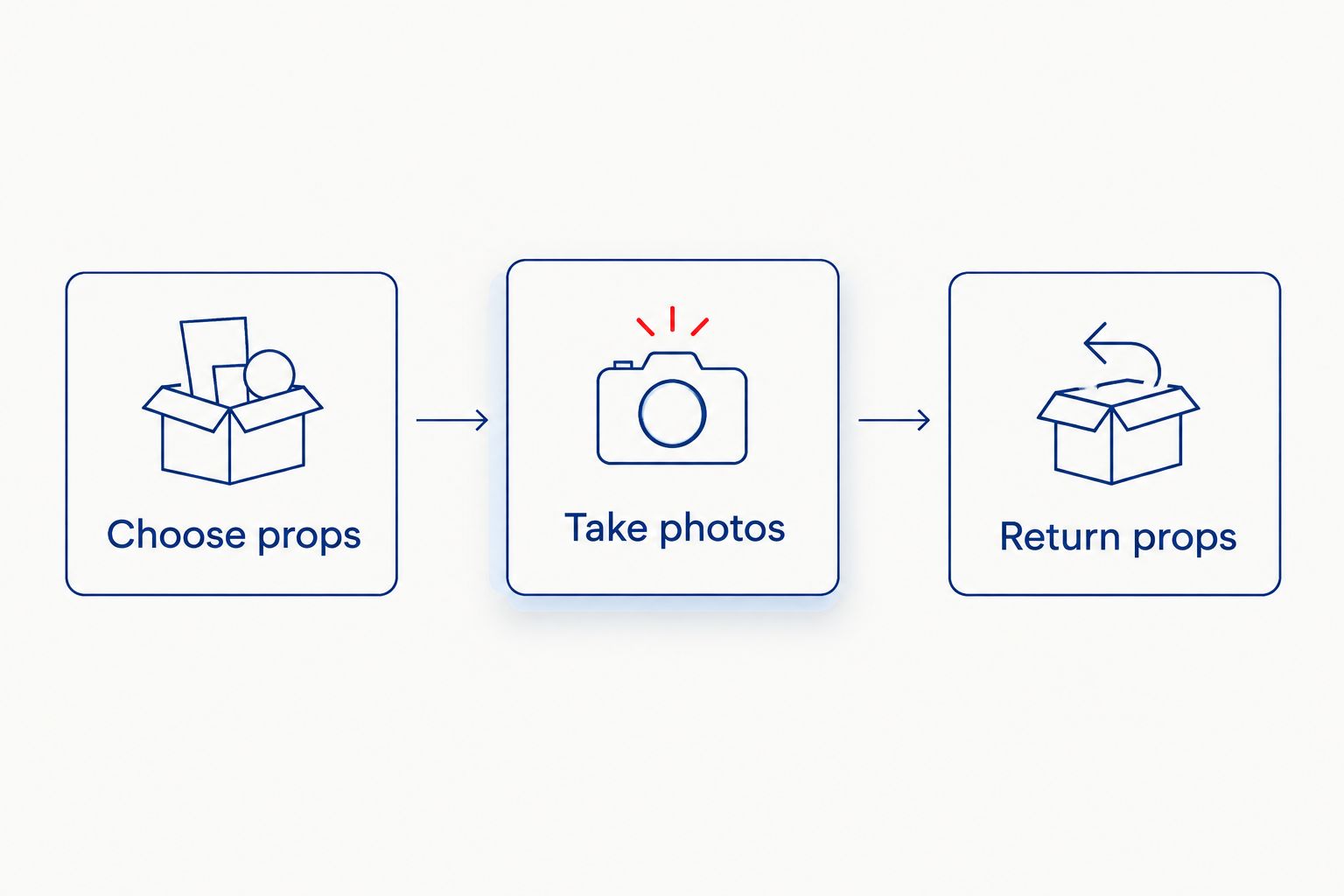
Give the station a simple sequence: choose props, take photos, return props. For take-home favors, replace the return instruction with a clear handoff. Do not make guests guess whether an item belongs to the event or to them.
Use this station checklist:
- Choose props: explain that wearing sunglasses is optional.
- Take photos: offer a picture without props as well.
- Return props: provide a clearly designated return place when sharing.
- Keep the cause sign readable beside or behind the group.
- Follow your event’s photo-permission and shared-prop procedures.
6. Brief volunteers and protect guest choice
Use the same event briefing you already give volunteers. Add the prop location, the keep-or-return instruction, and the person responsible for questions. A short written note is more useful than different explanations at each table.
Separate three decisions: wearing sunglasses, being photographed, and having an image published. Participation in one does not establish permission for the others. Follow your organization’s photography procedures, especially when children, beneficiaries, or guests with privacy concerns attend.
For your 2026 fundraiser, keep the photo activity distinct from the donation request. Guests should be able to participate without a volunteer implying that a gift is required. If your event combines merchandise and giving, have the responsible finance lead approve the wording and handling before the event.
Include these points in the briefing:
- Explain where the optional photo activity happens.
- State whether props are returned or kept.
- Offer a no-prop picture without drawing attention to the choice.
- Apply the nonprofit’s photo-publication procedures.
- Refer donation and receipt questions to the designated event lead.
7. Review use before repeating the idea
Use a paper tally sheet or your existing event spreadsheet to record what happened. Do not turn a cheerful group picture into a claim that sunglasses increased donations. Evaluate the prop activity on observations your team actually recorded.
Track 3 tally fields: pairs handed out, pairs returned, and unused pairs. These are suggested operating records, not a success benchmark. For take-home favors, mark returns as not applicable rather than treating retained items as missing.
Add a short volunteer debrief to your 2026 event wrap-up. Ask whether guests understood the station, whether distribution interrupted other tasks, and whether the theme made sense. Record specific problems while the team still remembers them.
Finish with these actions:
- Reconcile the prop tally with the distribution plan.
- Record damaged or unaccounted-for items separately.
- Save only photographs cleared for your intended use.
- Note confusing instructions or misplaced signage.
- Decide whether to repeat, revise, or remove the activity.
Compare options for your fundraiser
Choose the format first and the product second. This table separates buying a themed design from deciding how guests will use it. A holiday-specific option belongs only at a matching event; a shared station needs an explicit return process.
| Option | Best for | Practical advantage | Key limitation |
|---|---|---|---|
| Shared photo-station sunglasses | Fundraisers with a dedicated photo area | Gives props a defined location and activity | Requires return instructions and shared-prop handling |
| Individual take-home sunglasses | Events that already include guest favors | Makes ownership clear after distribution | Requires a recipient-based quantity plan |
| Scheduled group-photo sunglasses | Volunteer or supporter celebration pictures | Concentrates distribution around a planned moment | Requires coordination without delaying the program |
| I LOVE ST PADDY'S DAY Party Sunglasses | St. Patrick’s Day fundraising celebrations | Lens wording matches the holiday | Does not communicate the nonprofit’s mission |
| NO TRICK JUST TREAT Halloween Party Sunglasses | Playful Halloween fundraising events | Lens wording matches the seasonal theme | Does not suit an unrelated or solemn event |
Funglasses party sunglasses serve the themed-photo role. Keep the event’s cause statement and donation directions visible elsewhere, whichever distribution format you choose.
Common mistakes nonprofit fundraiser planners make
Buying a theme before defining the activity
A committee approves a fun design, but nobody decides when guests will use it. Reverse that order: identify the photo moment, choose the distribution format, and then approve the product. Skip the purchase if the program has no appropriate use.
Treating occasion wording as nonprofit branding
Holiday lens text explains the party theme, not your cause. Keep your organization’s name and approved message on event signage. Do not describe an occasion-specific design as a custom nonprofit product without confirmed details.
Making the prop feel tied to a donation
A handoff at the donation desk can create unclear expectations about who receives a pair. Place an optional photo activity elsewhere and state the participation rules. Have your event lead approve any arrangement involving both goods and donations.
Counting every attendee as a favor recipient
A shared photo station and a take-home favor program require different quantity plans. Work from the actual distribution model rather than the largest number on the invitation list. Assign ownership of changes so multiple organizers do not duplicate decisions.
Publishing cheerful photos without checking permission
A guest choosing to wear a prop has not automatically agreed to public promotion. Use your organization’s permission process before publishing. Give people an easy way to join the event without joining a photographed activity.
FAQ
What are party sunglasses for nonprofit fundraisers used for?
Party sunglasses for nonprofit fundraisers are used as themed photo props, group-picture accessories, or planned take-home favors. Choose the role before setting quantities and keep the nonprofit’s message on separate event materials.
What’s the best way to use sunglasses at a charity event?
An optional photo station is a clear way to use sunglasses when your charity event includes a suitable celebration moment. Explain whether guests return or keep the props, and offer a picture without them.
Are Funglasses suitable for nonprofit fundraising photos?
Funglasses suits nonprofit planners seeking graphic, patterned-lens party sunglasses for themed group photos. Select wording that matches the occasion rather than expecting the sunglasses to explain your cause.
Should every fundraiser guest receive a pair?
Every guest needs a pair only if your approved plan includes an individual favor for every guest. A shared photo station should use a separate quantity plan based on its intended operation.
Can guests use the photo station without making a donation?
Make an optional photo station independent of the donation request. State your event’s participation rules clearly and keep donation questions with the designated fundraising lead.
Can we publish photos of supporters wearing party sunglasses?
Publish supporter photos only under your organization’s applicable permission procedures. Wearing sunglasses or posing for a picture does not by itself establish permission for public use.
Are patterned party sunglasses a substitute for protective eyewear?
Do not use patterned party sunglasses as a substitute for protective eyewear without verified protection information for the exact product. Treat this guide’s recommendations as photo-prop planning, not protection guidance.
One last thing
Take the cause-centered picture before the playful version. Ask your photographer to capture the group with the nonprofit’s sign visible, then invite anyone interested to add sunglasses. That gives you distinct images without making the prop the only way to participate.
Before repeating the idea at your next 2026 event, check the tally and volunteer feedback. Keep the activity because it fits your program—not simply because it appeared in a photograph.


